Column

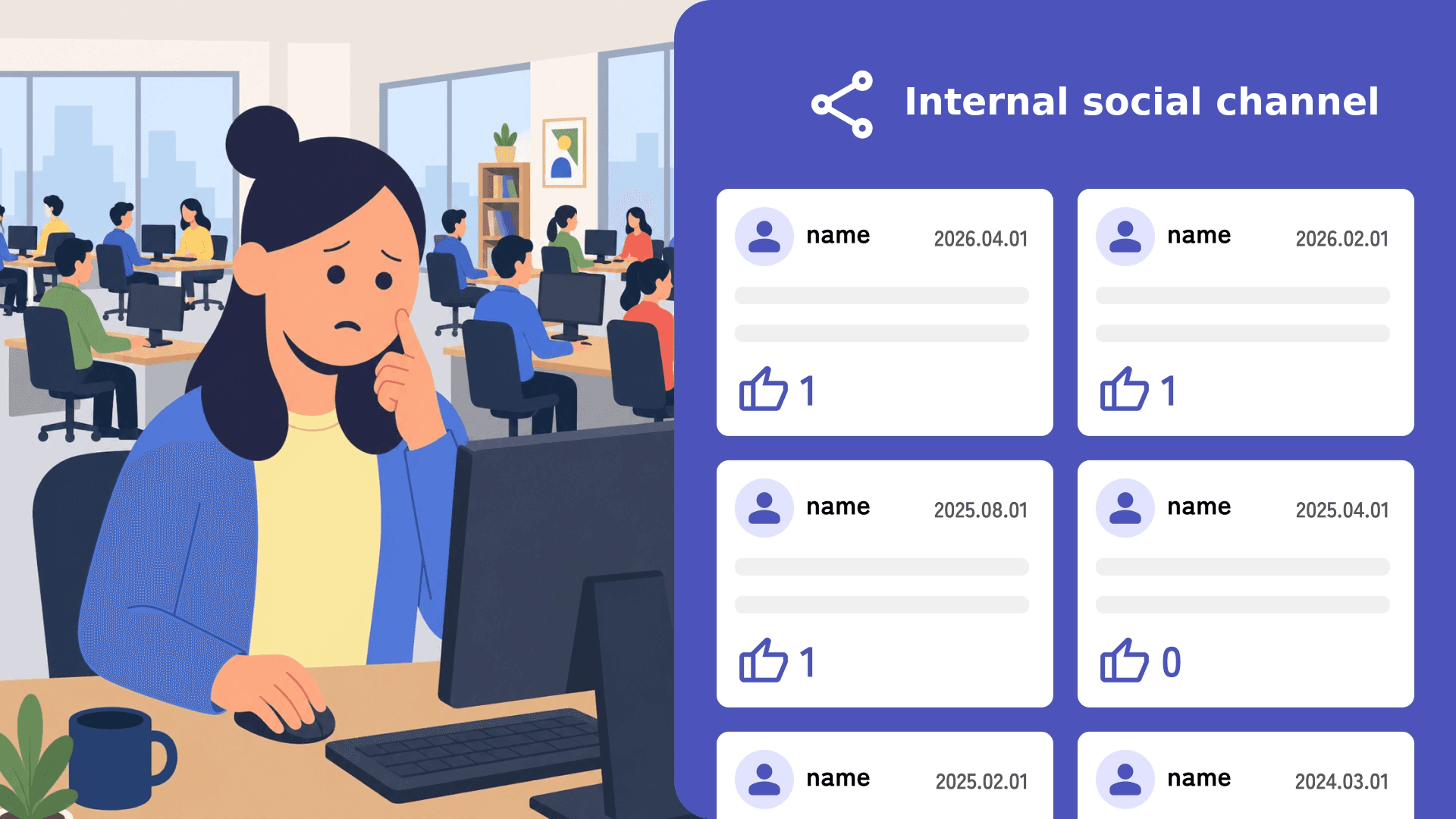
Many organisations launch an internal social channel with the best of intentions. The CEO starts posting. HR gets involved. Someone from leadership shares a behind-the-scenes moment. The vision is clear: a connected, open culture where people across departments actually talk to each other.
And then, quietly, it stops. Posts go unanswered. Engagement flatlines. The channel doesn't get shut down — it just gets ignored, buried under the daily pile of emails and chat notifications that employees actually have to respond to.
Why does internal social channel employee engagement so reliably fall flat? In most organisations, the same three patterns appear.
1. Trying to force enthusiasm creates the opposite effect
Picture this: leadership decides the internal social channel needs more energy, so the CEO and HR begin posting daily. Carefully crafted messages. Consistent effort. Real commitment to making it work.
But something unexpected happens. Instead of feeling inspired, employees feel watched. When the intimidating senior director starts liking every post, reacting no longer feels voluntary — it feels like a performance review criterion. Employees who might have engaged casually now say nothing at all. The harder leadership pushes for warmth, the more the channel feels like an obligation.
The underlying issue is that social platforms are built on spontaneity. The moment participation feels like a work task — something you could theoretically be judged for not doing — the instinct to opt out becomes almost universal. Busy employees already have more demands on their attention than they can manage. Adding an unspoken expectation to engage publicly is one ask too many.
2. The silent majority is the norm — not a sign of failure
Here is the counterintuitive truth about employee engagement internal communications on social platforms: most people don't react, and that is completely normal.
Research on social platform behaviour consistently shows that a small minority of users generate the vast majority of visible activity. Most people read, observe, and absorb — without ever clicking like or leaving a comment. This is true on public social media and it is even more pronounced on internal platforms, where the stakes feel higher.
In a workplace, every public reaction carries a social calculation. Will this make me look like I'm trying too hard? Will my manager read something into it? Is it safe to engage with this particular post given the current team dynamics? The instinct to stay quiet — to neither endorse nor challenge — is a rational response to an environment where professional reputation is always, to some degree, on the line.
This doesn't mean nobody is reading. It means the visible engagement metrics on your internal social channel will almost always underrepresent actual reach. A post with two reactions may have been read by two hundred people.
The practical implication: don't measure the success of your internal social channel by likes and comments. And don't try to manufacture engagement by pressuring people to react. A channel where people read quietly but trust that the content is worth reading is a functioning channel.
3. When everything lives in the same place, nothing gets the attention it deserves
The third pattern is a structural one, and it's arguably the most damaging to internal communications channel strategy.
Imagine an employee scrolling through the internal social feed. There's a photo from the team lunch. A reminder about the car park rescheduling next Tuesday. Someone sharing an interesting industry article. A post about the company's quarterly results. A birthday announcement. And somewhere in the middle of all of that — an important update about a policy change that affects everyone's working arrangements.
Most employees will miss it. Not because they're disengaged, but because nothing in the channel signals that this particular post matters more than the others. Everything looks the same. Everything competes equally for attention. And in that environment, genuinely important messages get buried under the noise just as quickly as everything else.
This is the core problem with internal communications tools when they aren't deliberately structured: adding a new channel doesn't solve the communication problem — it adds to it. Every new platform employees are expected to monitor is another source of interruption. And when the notification sound for the internal social tool is indistinguishable from the notification for a critical update, the brain learns to treat both as background noise.
The fix: separate the casual from the official
The solution isn't to abandon internal social channels — it's to be honest about what they are and aren't for.
Internal social platforms work best when they are genuinely optional, genuinely low-stakes, and genuinely separate from the channels where important information lives. That means resisting the urge to use the social feed for official announcements, policy updates, or anything employees could be held accountable for missing.
Official communications — the updates that every employee needs to see, understand, and act on — belong in a dedicated, clearly structured channel purpose-built for that function. Whether that lives in Teams, Slack, or another platform your organisation already uses, the key is that employees know exactly where to look for information that matters, and that channel is kept clean enough to be trusted.
When those two things are separated clearly, something interesting tends to happen. The official channel becomes more effective because it isn't competing with noise. And the social channel, freed from the pressure of having to carry important messages, gradually becomes what it was always meant to be — a place where people engage because they want to, not because they feel they have to.
The goal was never to make employees perform engagement. It was to build an environment where genuine connection could happen on its own terms.
Learn how NewCommunicator helps organisations deliver the messages that matter clearly and reliably across Microsoft Teams: NewCommunicator